
| Home | Bio | Publications | Events | Bill's Books | Worth Reading | For Writers | Contact |
| Home | Bio | Publications | Events | Bill's Books | Worth Reading | For Writers | Contact |
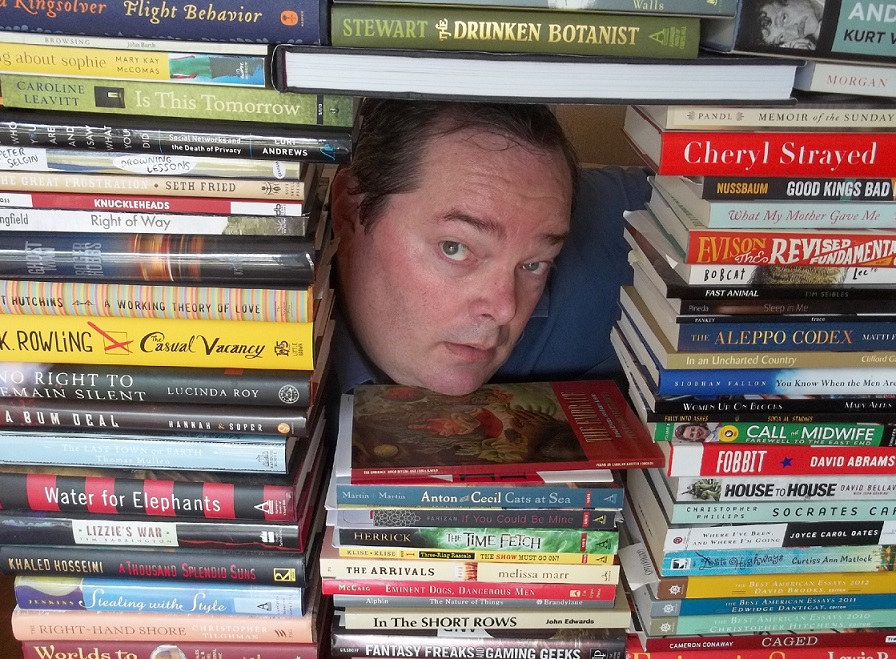 Bill and His Reading List |
|
| WELCOME |
I've been reviewing books for Virginia Living since 2003, and writing freelance reviews before that
for various magazines and newspapers. Countless friends and acquaintances have asked me
what books I'm reading and which of those I'd recommend, so it seemed a good idea to put
together a list of "best reads" that I could share with anyone interested in my opinion.
Remember though, tastes vary; a book I think is a great read might not be your particular flavor.
If you prefer one genre over another, you can always check out the award-winning lists for those particular
types of books, such as the Edgar Award for mysteries,
the Bram Stoker Award for horror, and
the Hugo Award for science fiction. Browse through my lists, and, if you have a suggestion for a great read, please send it along. Click HERE to send me an e-mail message. |
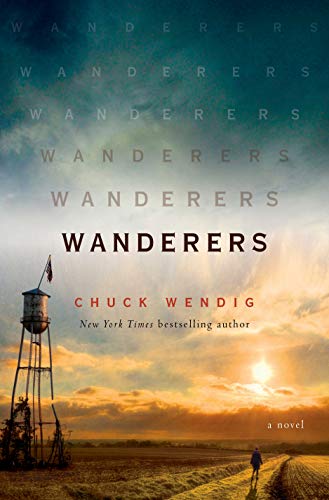 |
Best read from 2019 Wanderers, by Chuck Wendig. In this compelling tale, an unknown phenomenon turns ordinary people into sleepwalkers. Unlike the brain-eating variety to which we�ve become accustomed, these are zombies in the truest sense. These vacuous somnambulists are unable to communicate with anyone else and possess inhuman strength that allows them to push through most obstacles in their way. As the walking horde roams through a fractured America, some �shepherds� try to protect the �flock� while fearful others try to kill them. As other people around the world succumb to a different disease of unknown origin, the terrifying reason behind the Wanderers� condition slowly unfolds. Wanderers is a fascinating read similar to Stephen King�s The Stand in its wide-reaching scope and in the way it rips down the social fabric to reveal the heart of humankind. |
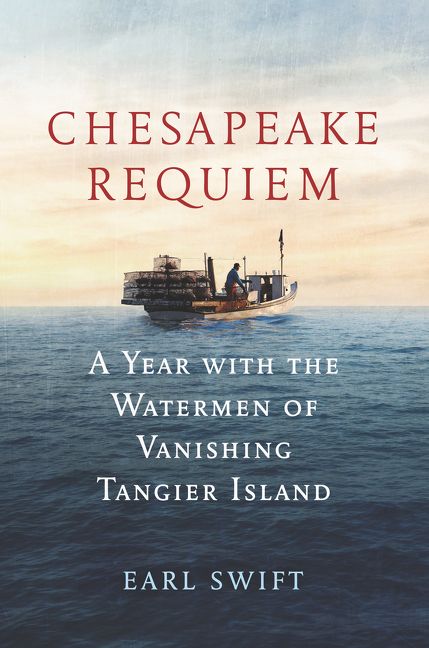 |
Best read from 2018 Chesapeake Requiem: A Year with the Watermen of Vanishing Tangier Island, by Earl Swift. Set in the middle of Chesapeake Bay and only reachable by boat or small aircraft, Tangier Island has evolved at its own slow pace, little affected by modern influences. The island has no cellphone service, and cable TV and internet are fairly new acquisitions. The result is a unique and iconic piece of American landscape that is home to a gritty community of watermen. But not for long. Due to climate change and rising sea levels, the island will soon slip away unless the federal government intervenes. Otherwise, the tide will keep chewing away shoreline at a rate of more than 25 feet per year�sometimes much more�until the land is completely swallowed by the bay. In Chesapeake Requiem, Earl Swift tells the story of this sinking island and its shrinking population of strong-willed watermen. Spending 14 months on Tangier, Swift captures the majesty of this island and the nobility of its people. We witness the arduous labor and long hours that crabbing demands and the extreme hardships of life cut off from the mainland. Melancholy abounds in these pages as island residents gaze across open water and remember now-sunken forests they once played in as youngsters and the neighborhoods abandoned to pounding surf. Oyster Creek. Canaan. Homes and graveyards now several feet underwater. The destructive force of hurricanes and tropical storms further multiplies the regular ceding of land to water. After one big storm, Swift travels by boat with an islander, Carol Moore, to the ruins of Canaan. Sifting through detritus, Swift captures the experience with his keen eye for telling details, writing, �I collect a nail, the neck of an ancient ice-blue bottle, and a wave-worn knot of tree limb, stepping around headstones that every few weeks Carol has dragged clear of the advancing water. �Near the water�s edge I find a silvery metal bracket perhaps two inches long and shaped into a scroll, like the head of a violin. I have no clue what it might be. Carol Moore is scanning the shore about fifty yards away, and I carry my find to her. She identifies it with the briefest of glances: �That�s from a casket.� A few minutes later, examining a tidal pool in the sod, I find what appears to be an interesting piece of driftwood. It�s pale gray, four inches long, and resembles a tree stump in miniature. It feels featherweight, leached of substance, and I see that it�s laced with tiny holes. With a jolt, I realize it�s bone. I gently return it to the ground.� As with many tragedies, Chesapeake Requiem is also a love story. The book serves as Swift�s love letter to the islanders he�s come to look upon as family. Their lives are hard and their fortunes fickle, with livelihoods dependent on the vicissitudes of weather. But no matter how desperate their situation becomes, their will remains indomitable. In page after page, admiration for the residents of Tangier resounds in Swift�s rich descriptions of islander actions, habits and manner of speech, things someone could only learn after long study in close company. The overriding theme behind the whole story is that Tangier is just the first place of many that will soon be affected by climate change. By showcasing the slow-moving tragedy unfolding on Tangier, Swift shows not only what we stand to lose with this remarkable island, but how its fate foretells what may happen elsewhere as well. As sea levels rise, more and more cities will be affected. Seaside populations will be displaced, creating ripples of turmoil that stretch far from shore. The looming crisis is sure to bring out the best and worst of human nature. How to choose which communities to rescue and which to let sink into the sea? This difficult question won�t get any easier with time. Chesapeake Requiem is a remarkable book gorgeously written. It should be required reading for anyone interested in the future of our planet. |
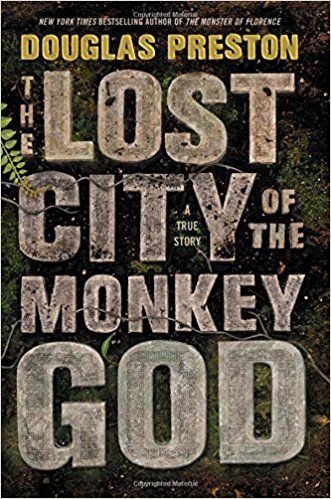 |
Best read from 2017 The Lost City of the Monkey God, by Douglas Preston. In spellbinding fashion, mystery novelist Douglas Preston details a Honduran exploration in search of a fabled city using laser-enhanced radar to map the ground below the canopy. Preston�s colorful depictions of impenetrable jungle, howling monkeys, and deadly fer-de-lance snakes make it seem as if you are there alongside him as the expedition actually discovers this civilization formerly lost to time. Rich with history and tales of deceit by previous explorers, The Lost City of the Monkey God is a fascinating read that will slake your thirst for adventure. |
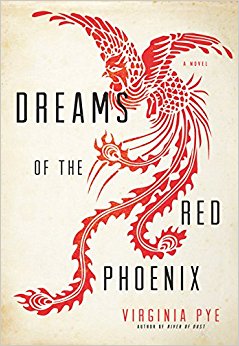 |
Best read from 2016 Dreams of the Red Phoenix, by Virginia Pye. In the early 20th century, Virginia Pye�s grandparents were missionaries in northwestern China. Her grandfather died there and her grandmother remained afterwards for decades, imbuing Pye�s personal history with Chinese lore. Fascinated with her grandfather�s journals and reports to his mission board, many written in the spidery scrawl of a fountain pen, Pye borrowed from his exploits to write a novel in 2013. Titled River of Dust, the book features young American missionaries in China circa 1910. Their idealism is shattered when Mongolian nomads abduct their young son. The remainder of the book tells the story of his relentless search to recover their child as the two parents� minds slowly unravel. While discussing the book�s promotion with her editor, Pye mentioned an anecdote about her grandmother shooing Japanese soldiers off her front porch with a broom. The editor suggested this experience as the organizing catalyst for a new novel. Thus was born the headstrong protagonist, Shirley Carson, an American missionary�s wife who serves as the focal point of Pye's second historical novel set in China. Picking up where River of Dust left off, the characters in Dreams of the Red Phoenix are the next generation of missionaries from the same family in the 1930s. The book opens with Shirley mourning the loss of her husband, who disappeared in a mountain landslide while trekking to neighboring villages. Beforehand, Shirley had lived in ignorant bliss, treating her time in China like a vacation and making no effort to adapt to local culture and customs. When she finally comes out of her grieving stupor, she yearns for nothing more than occasional shopping trips and high teas with other American wives. But circumstances intervene. The Second Sino-Japanese War sends Japanese invaders across northern China, where towns are coated in the Gobi Desert�s yellow dust. Suspected revolutionaries are executed in the street right outside Shirley�s window, making the war all but impossible to ignore. When her medical assistance is requested, Shirley converts her missionary compound into a makeshift clinic. She relies upon her training as a nurse to treat the throng of wounded Chinese, which includes raped and pelvis-shattered women. As Pye writes: �Although the bulk of the Japanese Imperial Army had departed for the front to the north, several units remained in town and went on rampages, seeking food and the spoils of war. Chinese women stumbled into the clinic, barely able to walk. Some could no longer speak, their minds having left the shells of their flesh behind. The young girls were the most tragic, but several grandmothers had born the same treatment.� But then a strange thing happens to Shirley�for the first time in her life, she feels true purpose in her actions. Soon, she eschews all that she once held dear and discovers the same affinity her husband had felt for the downtrodden commoners in this unforgiving land. While Dreams of the Red Phoenix is enlivened by intriguing subplots�the impetuous behavior of Shirley�s teenage son, Charles, and the dangers that puts him in; the Chinese factions (Communist Reds vs. Nationalist Whites) competing for power; and the day-to-day struggles of Chinese villagers�Shirley�s transformation from oblivious elitist to impassioned caregiver is the novel�s heart. �I latched onto this topic and decided this was a story I needed to tell,� Pye says, �understanding the mistakes Americans have made in foreign settings, that kind of hubris. It may take place in a foreign land, but it seemed like a very American story.� While the genesis comes from Pye�s personal narrative, she had to conduct outside research to lend an air of authenticity to her story. �I read Jonathan Spence�s History of Modern China,� she says. �It starts in the year 600, which just cracks me up. Chinese history is so vast that that is what they consider modern.� Verisimilitude resonates through the resultant text, which is rich in the history of this harsh region: �Shirley had come to love this vast and maddening cipher of a country. The Middle Kingdom, as China had called itself from ancient times, Center of All Under the Vast Heavens, was known as encompassing all things in all seasons: the brick walkways and dusty grounds of the mission compound, the grassy plains where peaceful streams ran past willows, the purple-shrouded mountains in the distance, and even the teeming, desperate streets of Shanghai.� The many details that come from Pye's family saga served as a launching point for her fertile imagination. �You try to put yourself in the mind of how your ancestors might have thought,� Pye explains, �but otherwise everything is entirely made up. I�m stretching the truth in every possible way.� The result is a story that not only illuminates, but also entertains. Dreams of the Red Phoenix is a captivating tale that will transport you in time and place, transfix with its many twists, and leave you longing to discover more about this ancient and mysterious region of China. |
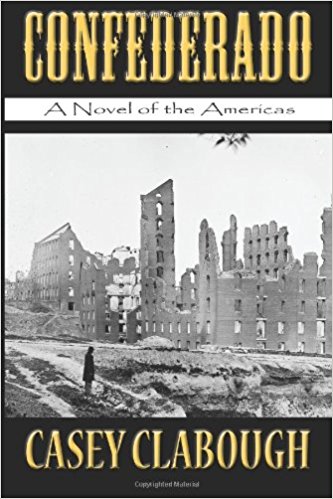 |
Best read from 2015 Confederado, by Casey Clabough. Appomattox resident and Lynchburg College English professor Casey Clabough has nine books to his credit, most of which are scholarly examinations of authors and literature. His one novel, he confesses, could have been told as non-fiction as well. That story had come from a family tale passed down by word of mouth through generations. Shortly after the end of the Civil War, one of Clabough�s ancestors had immigrated to Brazil where he lived the remainder of his life, marrying a Brazilian woman and fighting in another war for his new home country. Clabough�s ancestor wasn�t the only disgruntled Southerner to seek new life in Brazil. Thousands more joined the exodus, and these expatriates became known as Confederados. �The Brazilian Emperor knew Southerners possessed advanced agricultural knowledge,� says Clabough. �Free land-grants were advertised in Southern newspapers, even here in Richmond, and a number of hard-pressed Southern families and Confederate veterans took the chance as a way of starting over in South America.� His novel, Confederado, follows the journey of Alvis Stevens from the war-ravaged lands of Virginia to the lush forests of Brazil. �The real story was a great story,� says Clabough. �[The book] didn�t have to be fiction�and a lot of it isn�t.� By giving himself the liberty of imagination, he could inject drama to benefit the adventurous plotline. In so doing, Clabough achieves the ultimate of literary trifectas: the combination of a revelatory story, a fascinating plot and muscular prose. The book is reminiscent of Charles Frazier�s tour de force Cold Mountain, though the dialogue does not stray as far into the vernacular, making it easier to read. The story begins as the Civil War ends. Alvis makes his way home only to find the family farm in ruins. He works hard to resurrect his farmland, but he is forced to go into town and register that he is loyal to the United States. During the war Alvis had served in Mosby�s Rangers, which was famous for two things: horsemanship and ruthlessness. When he goes into town to swear allegiance, his former service is made known and he becomes a marked man. Peace may have been declared, but that doesn�t mean all soldiers can turn off the spigot of hate that fed four years of bloodshed. One Union occupation soldier attacks Alvis, and Alvis is forced to kill him. Although it was self-defense, Alvis is now labeled an outlaw with a bounty on his head. His only choice is to run away. In one passage Clabough sums up the misgivings of his hero�s forthcoming quest: �He knew only that a long exile likely lay ahead of him and vast sea reaches beyond his imagining. He had been to the war and acquired from it a terrible body of knowledge, but it remained that he knew precious little of the world. Yet the understanding that he might be condemned to forever walk alone upon it pierced his heart more woefully than any wound of battle had.� As Alvis trudges eastward through Virginia, we witness the wreckage left by war: ramshackle homes missing floorboards, walls pocked by shell holes, hardscrabble earth riddled with weeds instead of crops. Throughout the novel Clabough pays great attention to the scenery, but it is after Alvis lands in Brazil and wends his way through the forest that the landscape flourishes with the strokes of his masterful pen. �Some of the true trunks were as broad as houses, their massive roots snaking away in all directions. The light of day came and went, splitting the canopy in some places while failing entry everywhere else�blocked, as it were, to the degree that the visibility resembled that of dusk.� To ensure authenticity, Clabough first conducted thorough research at universities, at the Library of Virginia, and at the Virginia Historical Society. �I also was fortunate,� he adds, �to get an artist�s grant from the Brazilian government which allowed me to track the book�s protagonist and do some cool things like photograph anacondas.� Much of the novel is intimate, melancholic and contemplative, looking inside Alvis�s thoughts as he struggles to make sense of war and what becomes of the men who fight them. But he is heartened by the knowledge that his former love, Lavinia, had also immigrated to Brazil with her family. Alvis had cast her out of his mind during the war, but now could think of little else. As Clabough writes, �The sad constellation of circumstances regarding his family at home, along with the haunting ravages of the war, had blocked further thought of her from his mind. But she had been his love before the war and likely his wife if war had not come." As before, war threatens to keep the lovers apart again. He and other Confederados are recruited to fight in the War of the Triple Alliance, a six-year war between Paraguay and the combined armies of Argentina, Brazil and Uruguay. Alvis�s combat skills are once more put to use and demons he had hoped to lay to rest are reawakened. Confederado is about redemption and new beginnings, about starting your life over again after it seemed all was lost. Clabough weaves together this most human of themes with the inhumane conditions of war. That he plays out this story against a backdrop of Civil War history known by very few people today serves to make his novel a stunning and captivating read. |
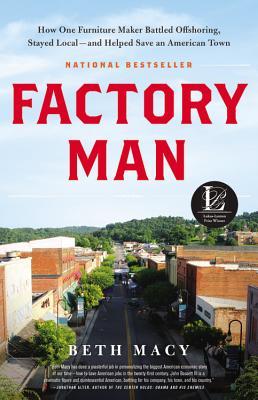 |
Best read from 2014 Factory Man, by Beth Macy. This is one of the most important books of our times. It describes how globalization is tearing apart the fabric of America by outsourcing its ability to produce by showcasing the plight of individuals and the surrounding community affected by the shuttering of Bassett Furniture factories. Not only does Roanoke Times reporter Beth Macy bring together impressive research on the rise, fall and outsourcing of an American furniture empire, but she also tells the story in compelling fashion. America rose to become the world's leading superpower based on its manufacturing might. The loss of over 65,000 factories in the last decade is the main reason for its current decline. We've all heard the stories before of corporate greed wiping out once booming factory towns. By relocating manufacturing operations to foreign countries, companies can produce cheaper products, pay workers scandalously low wages, and profit from lackadaisical regulations on emissions and other environmental factors. Stockholders see a short-term increase while buyout clauses and golden parachutes allow upper management to live fat off pensions, leaving displaced workers to scramble for work, usually at much lower wages and with fewer benefits than before. The media had played out other variations of this story for years�the steel industry�s implosion, the garment industry�s exodus to Asia, Detroit�s bankruptcy. But then Macy discovered something new and hopeful: one company, Vaughn-Bassett Furniture, was bucking the trend and keeping its manufacturing operations in Galax, Virginia. And the sole reason was that the indomitable owner, John Bassett III, wished to keep his employees working and his community thriving. Her in-depth investigation into the rise and fall of the Bassett furniture empire and the effects of globalization on American factory towns is at the heart of Macy�s fascinating book, Factory Man. Her book details the history of Bassett Furniture back to its formation in 1902, when John D. Bassett decided to stop shipping lumber from his sawmill to furniture factories in the Midwest so he could make his own furniture in Virginia. While his Midwestern competitors stodgily maintained artful handcraftsmanship, Bassett implemented assembly line techniques and produced a high volume of less expensive furniture, and stores throughout the South filled their showrooms with his product. In addition to saving on transportation costs, Bassett rode his way to the top on the backs of cheap labor. This was the South a mere forty years after the Civil War, and Jim Crow laws prevented blacks from doing much of anything that could advance their situation. But the Bassett factories were some of the first in the South to hire black workers. As Macy writes, �Black employees knew their salaries weren�t equal to the whites� working at Bassett, and the possibility for advancement was nil. But for the most part, they were treated with some dignity, and, relative to other jobs in the segregated South, working conditions were adequate. ...They worked the hottest, dirtiest jobs, usually in the finishing room, where it didn�t matter how dark you were: when the whistle blew at the end of the day, everyone was stained with varnish.� Macy does a superb job of painting a full picture, counterbalancing the generous opportunities and good deeds of Bassett Furniture with the founding family�s sometimes underhanded business practices, such as pouncing when a competitor�s popular furniture set sold out by creating a knockoff they would sell at half the price. Macy also shines light on the skeletons in the Bassett family closet, such as cousins marrying each other to keep their fortune within the family. One maid, Dollie Finney, �wore two girdles at once to keep wandering Bassett hands in check.� But these peccadillos are merely side dishes. The main course is the building and maintaining of a furniture empire. As chapters progress, Bassett Furniture becomes the largest wooden furniture company in the world and the corporation spawns several subsidiaries, one of which was Vaughn-Bassett Furniture. Then in the 1980s, Asian companies started buying up interests in manufacturing plants and foreign nationals came over to supervise production and figure out processes. It all seemed harmless at first, but then, one by one, factories were replaced by facsimiles of themselves in far-off lands and the market was soon flooded with products far cheaper than anything that could be made in America. Bassett Furniture shut down 28 of its 42 factories and shifted their focus to retail operations, where they could sell Asia-made product bearing the Bassett name. The town it created�-Bassett, Virginia�-fell on hard times, but just down the road in Galax, Vaughn-Bassett Furniture held fast. The once subsidiary company even tried to buy one of Bassett Furniture�s shuttered plants, but the former parent company razed the building instead. Selling Vaughn-Bassett Furniture would be lucrative, but the owner, John Bassett III, decided to fight back. The Chinese were selling a wooden dresser for $100, an amount less than the cost of its component material. This was a violation of World Trade Organization laws, so Bassett traveled to Dalian, China to find out how they were doing it. It took some undercover work, but he discovered that the Chinese government was subsidizing their businesses so they could deeply undercut everyone else in the market. This was precisely the type of thing the World Trade Organization was formed to prevent, so Bassett sued. And won. With money he won from his antidumping case, Bassett reinvested in his company. He spent millions on state-of-the art machinery and streamlined his factory�s processes. While his success story provides a blueprint that other industry leaders can follow, it also presents a stark truth: for factory towns to survive in today�s global economy, owners must eschew short-term bonanzas for the stability of long-term profit in a stabilized economy. For a society with rich tastes and a hunger for immediate gratification, that might be asking too much. |
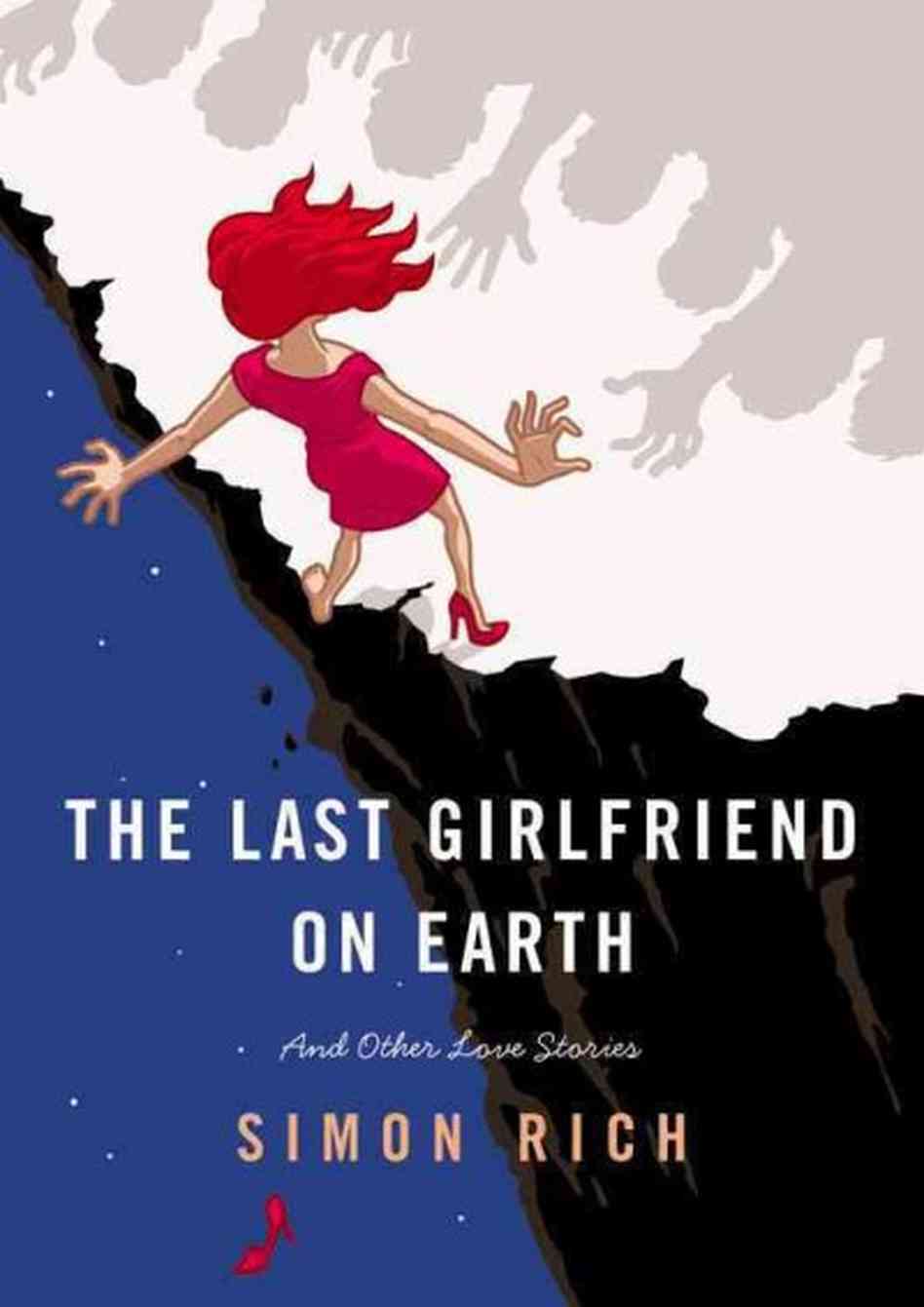 |
Best read from 2013 The Last Girlfriend on Earth and Other Love Stories, by Simon Rich. When is the last time you remember lauging out loud while reading a book? A long time, huh? Most humorous merely force a grin to break out as you revel in some witticism by a clever author. Not so for Simon Rich's stories in this incredible collection. Each story in this slim volume (213 pages) will have you clutching your sides with laughter. The stories in this collection provide an off-kilter look at the world of dating through the eyes of the wunderkind who has gone on to write for Saturday Night Live, Funny or Die and Pixar. He's the writer everyone wants a piece of for two good reasons: (1) his writing is smart and clever and (2) his premises are so weird, so awkward, and so damn funny. Who else could write hilarious sketches about Mother Teresa, horny astronauts, and the life of an unused condom and combine them all in one collection? Nobody, that's who. Take his story "I Love Girl" for instance. In it, two cavemen competing for the hand of a cavewoman, "Girl." The smart caveman draws paintings and belittles the other suitor with language few in the tribe can comprehend. The dumb caveman throws him off a cliff and he and "Girl" live happily ever after. In another story, a bachelor details the woes of his sorry existence and you start to feel for the poor guy. So, when he accepts his married friends' offer to be set up on a blind date, you're just as hopeful as he is. And you're just as perplexed when his date turns out to be a troll. Literally. A troll who growls, bites his leg, and trashes the kitchen. But he, and you, are the only ones to realize this is peculiar. Everyone else in the story is acting like it's a regular first date. My summaries don't do justice to these stories, nor could they, for it is in the turn of phrase and the way Rich makes you care for his characters that draws you into his stories. And that is the moment when he pulls the 'ol switcheroo on you. Taking a typical situation in a love story and peppering it with a little Kafka (and maybe even some Andy Kaufman). The Last Girlfriend on Earth is a great, entertaining read that you'll zip through and want to share with everyone you know. |
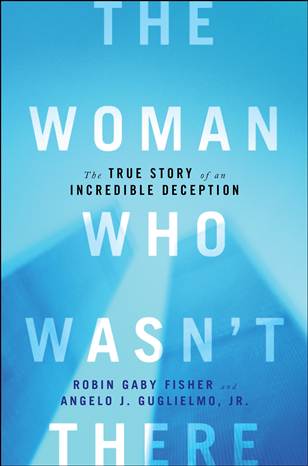 |
Best read from 2012 The Woman Who Wasn�t There, by Robin Gaby Fisher & Angelo J. Guglielmo, Jr. Accounts of Tania Head barely escaping the World Trade Center and her husband perishing on the 98th floor became front-page stories in the days following 9/11. In the ensuing years, Tania joined the World Trade Center Survivor�s Network and led such dignitaries as mayors Giuliani, Pataki and Bloomberg on tours at Ground Zero. Everyone admired her, wondered how she could be so strong. It was easy enough because she hadn�t really been in the World Trade Center that day�nor the country, for that matter�hadn�t been married, and hadn�t worked for the company she claimed. This is the story of a horrible series of lies, their eventual unraveling, and the questions left in the wake of the woman who wasn�t there. A fascinating read that will leave you both astonished and perplexed. |
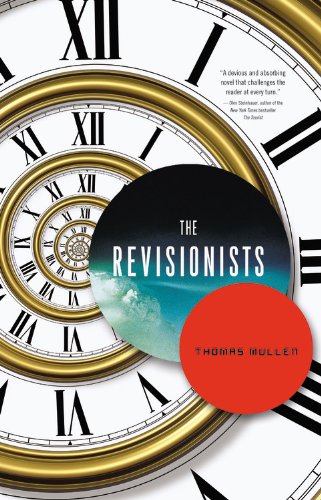 |
Best read from 2011 The Revisionists, by Thomas Mullen. Though shelved with other mysteries, The Revisionists is a literary crossover of the Cold Mountain variety, with writing so beautiful and characters so lovingly detailed that you would follow them wherever the story leads them. Here's an excerpt from when two of the main characters meet: "Standing farther down the aisle, frantically comparing the contents of her cart to a crinkled paper in her hands, was a gorgeous young Southeast Asian woman. � An indigo crescent moon curved beneath her left eye. He thought it might be a birthmark, because the only alternative was too unfortunate to consider: that it was the fading trace of a shiner. They made eye contact and he looked away, caught leering�was she as beautiful as he thought, or was he just thrown by all the conflicting signals? Her near-black hair was pulled in a loose ponytail, the strands seeming to sigh as they drooped around the elastic. There was a wide space between her eyebrows, a place he imagined a lover kissing." See what I mean? In mystery novels, I�m used to figuring out whodunit by the third chapter. But in The Revisionists, I not only had no idea who had done it, I had no real idea what "it" was that had actually been done! Or, in this case, was about to be done. Let me be clear, though: the confusion is due to delicious misdirection, not muddled writing. This is one of the most cleverly written and plotted books I�ve read in a long time. The basic plot is this: historical agitators, or hags, from the distant future are traveling back in time to prevent disasters, such as the Holocaust, the 9/11 attacks, and, in the all-too-near-future, the Great Conflagration. Also time traveling are futuristic government agents who use extreme force to prevent the hags from meddling, which might upset their �perfect present.� The story unfolds through the eyes of four main characters: Zed, an agent from the future, and three present-day individuals who are struggling in unhappy lives because of decisions they�ve made in the past. As each of their stories intertwines with the others, Zed is there to dispassionately observe and protect. But he, too, is haunted by his past and can�t help wondering what would happen if he intercedes on behalf of these otherwise doomed souls. As Zed battles hags over historical integrity in our own unperfect present, he begins to question the morality of his actions�and inactions�as well as why his government actually sent him back. |
 |
Best read from 2010 Richmond Noir, edited by Andrew Blossom, Brian Castleberry, and Tom DeHaven. A sick, disoriented, homeless woman is kicked out of a hospital and dumped on the side of the road like trash. A stripper considers prostituting herself so her friend can film it and blackmail the John. A battered body washes up on the shores of the James River and the police go through the motions but show no real interest. This is how three of the fifteen stories in Richmond Noir begin�like a hard blow to the reader�s solar plexus. Violence and injustice reverberate throughout Richmond Noir, but the disenfranchised main characters, from drug addicts and prostitutes to lonely retirees and unemployed bankers, somehow maintain an air of dignity. In the introduction, the three co-editors mention how 19th Century Richmond was �a-crawl with slingshot- and shotgun-toting gangs� and how in the 1990s it earned the label of Murder Capital of the United States; they go on to state, �Richmond is a city of winter balls and garden parties on soft summer evenings. ...It�s also a city of brutal crime scenes and drug corners and okay-everybody-go-on-home-there�s-nothing-more-to-see. ...When you accept a city not only for its strengths but also for its weaknesses, when you realize that the combination of the two is what gives the place true beauty...well, that is love.� �Love,� in this case, is of the bittersweet variety. Tender moments, when they appear, are not to be trusted. When a man wanders back to the dusty baseball diamond where he used to play Little League games, you can�t help but wonder how long it will take for his wistful reminiscence to turn tragic. Not long at all. The man is now a drug addict, and after everyone else leaves the baseball diamond he crosses the street to his former third grade teacher�s house with the intention of robbing it. He discovers the teacher has had her share of hard knocks. She is blind and poor, but that doesn�t stop him from blaming her for his troubles and slapping her around. Each story follows the general parameters of the noir genre (crime stories that typically feature tough, cynical characters in bleak settings), but the individual authors were encouraged to experiment. While many of the stories are set in typical noir settings (project apartments, trailer parks and run-down houses with sagging porches and machine parts in the yards), others are staged unusually in such places as marble-floored museums and hydroelectric plants. There is a diversity of style among the 15 stories contributed by 15 different Richmond area authors, each of whom took the basic premise of "noir" and applied it to different situations in the city of Richmond. In addition to a wide array of style and voice provided by the authors, each story is set in a different neighborhood. Along with the table of contents appears a map of Richmond with an outline of a dead body superimposed over each neighborhood featured in the book. The end result is taut and tense writing throughout, peppered at times with details of the city�s architecture and appearance. All but one story occur in present day Richmond, but most still manage to weave historical tidbits into their plots. From the opening line of Tom Robbins� foreword��When I think of Richmond, Virginia�my thoughts turn frequently to alleys��the city�s presence bears the distinction of a main character. In the opening story, �The Rose Red Vial� by Pir Rothenberg, a museum employee is seduced by a young volunteer who wants him to steal a vial of perfume once used by Edgar Allan Poe�s wife, Virginia. The story takes place inside both the museum and the employee�s home, but an image of the city comes through as the main character reflects on Poe�s life in Richmond. In �The Battle of Belle Isle� by Clay McLeod Chapman, two homeless people seek shelter near a mass gravesite of mistreated and malnourished Civil War POWs, foreshadowing their own bleak futures. Chapman writes, "Over a hundred prisoners of war dumped into the dirt. Nothing but burlap wrapped around their bones�the lice wriggling free, trying to hop out before the earth got shoveled over." This book serves as the editors� and authors� love letter to the city. Richmond, they assert, �is a hell of a place to live.� Judging by the book�s body count, it�s also a hell of a place to die. |
 |
Best read from 2009 Legacy: Walter Chrysler Jr. and the Untold Story of Norfolk's Chrysler Museum of Art, by Peggy Earle. Walter Chrysler�s life is an American success story and his company's role in the auto industry was, and still is, huge. But in Hampton Roads, it is the life work of his first son, Walter Chrysler, Jr., that has made a bigger impact. While the father�s passion lay with engineering, the son�s predilection was for art. Born into luxury, he traveled extensively and obsessively bought whatever caught his eye, sometimes purchasing valuable paintings but just as frequently buying junk of yard-sale quality. Even so, he amassed what would become one of the world�s finest private art collections, filled with works by Picasso, Matisse, Fragonard, and other masters. Although Norfolk already had a small art museum, the city was willing to expand it and name it after Chrysler if he would bring his $65 million in art (now valued around $1 billion) to Hampton Roads. Many locals are unaware that such a rich collection resides in Hampton Roads and even fewer know of the museum�s convoluted history, so Peggy Earle decided to tell the story. In Legacy, Earle both enlightens and entertains while describing the lucrative but volatile union of Chrysler and Norfolk. The behind-the-scenes stories of what it was like to work with Chrysler make this book hard to put down. �The most fun I had with the interviews was hearing these funny stories about [Chrysler],� Earle says, �because he was such a character. He was a true eccentric. He would constantly contradict himself and he would do such hilarious things...[such as] going through the [gift shop] postcards and making sure they were in alphabetical order.� Chrysler was compulsive, vain, and given to volatile mood swings, and there were those in the city who opposed allowing him in. But, the size of his gift trumped their reservations, and the cultural face of Norfolk has never been the same. |
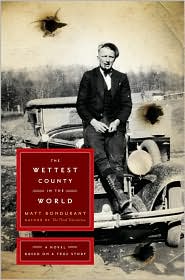 |
Best read from 2008 The Wettest County in the World, by Matt Bondurant. The Wettest County in the World is a gritty novel about a family of bootleggers in Franklin County, Virginia during prohibition. The central character is Jack Bondurant, the author�s grandfather. The book�s cover photo is an actual picture of Jack as a young man sitting on the hood of his car, cigar clamped in his teeth. Jack is introduced in 1919 as an eight-year-old boy trying to slaughter the family pig. He shoots it three times with a .22 rifle, but the pig won�t go down. So Jack�s older brother Forrest hops into the pen and slits its throat with a boning knife. In the next handful of pages, Jack�s mother and two sisters succumb to the Spanish Lady Flu. The scenes are told in a matter-of-fact manner, letting the reader know these are hard times and death comes easy, details relayed with the same grisly authenticity, melancholic tone, and spare eloquence of Charles Frazier�s Cold Mountain: �Jack remembers taking a biscuit from the plate, his shaking hand. His mother and sisters laid out on the floor, covered with a quilt. Nobody said anything.� The story quickly takes off with Jack and his two brothers, Forrest and Howard, setting up business to make their own corn whiskey. Bootlegging�or �blockading� as they refer to it�was for years a fairly risk-free endeavor in Franklin County, Virginia. Thirsty patrons could visit a bar or even a gas station to purchase a mason jar of White Lightning, or they could just place an order and have it delivered to their doorsteps like a morning newspaper. But all that changes in 1929 when the commonwealth�s attorney, Carter Lee, starts demanding protection money from all the blockaders in the county. Those who refuse will finally have to face repercussions, which in many cases are delivered via shotgun. Crooked cops aren�t the only problems lurking. With the Depression in full swing, ne�er-do-wells see robbing successful liquor way stations as a way to make a quick buck, turning a once harmless endeavor into a risky proposition. Throughout the book, various people good and bad are beaten, knifed, and shot, but no matter what happens, nothing stops the liquor from flowing. |
 |
Best read from 2007 House to House: An Epic Memoir of War, by SSG David Bellavia. From publisher's synopsis: On the night of November 10, 2004, a U.S. Army infantry squad under Staff Sergeant David Bellavia entered the heart of the city of Fallujah and plunged into one of the most sustained and savage urban battles in the history of American men at arms. With Third Platoon, Alpha Company, part of the Army's Task Force 2/2, Bellavia and his men confronted an enemy who had had weeks to prepare, booby-trapping houses, arranging ambushes, rigging entire city blocks as explosives-laden kill zones, and even stocking up on atropine, a steroid that pumps up fighters in the equivalent of a long-lasting crack high. Entering one house, alone, Bellavia faced the fight of his life against six insurgents, using every weapon at his disposal, including a knife. It is the stuff of legend and the chief reason he is one of the great heroes of the Iraq War. Bringing to searing life the terrifying intimacy of hand-to-hand infantry combat, House to House is far more than just another war story. Populated by an indelibly drawn cast of characters, from a fearless corporal who happens to be a Bush-hating liberal to an inspirational sergeant-major who became the author's own lost father figure, it develops the intensely close relationships that form between soldiers under fire. Their friendships, tested in brutal combat, would never be quite the same. Not all of them would make it out of the city alive. What happened to them in their bloody embrace with America's most implacable enemy is a harrowing, unforgettable story of triumph, tragedy, and the resiliency of the human spirit. A timeless portrait of the U.S. infantryman's courage, House to House is a soldier's memoir that is destined to rank with the finest personal accounts of men at war. |
 |
Best read from 2006 Late Wife: Poems, by Claudia Emerson. The winner of the Pulitzer Prize, Late Wife strips bare Claudia Emerson's private life, revealing the slow, painful dissolution of her first marriage and the reawakening at midlife she experienced upon remarrying a widower. The early poems in this collection are mournful, filled with silence, but the latter poems act as love letters to her new husband. Even so, some melancholy creeps in on occasion, especially when Emerson is reflecting on possessions of her new husband�s late wife. In one such poem, �Artifact,� she says of a quilt: �Months after we met, you told me she had/made it, after we had slept already beneath its loft/and thinning, raveled pattern, as though beneath/her shadow, moving with us, that dark, that soft.� |
 |
Best read from 2005 Bait and Switch: The (Futile) Pursuit of the American Dream, by Barbara Ehrenreich. The feedback that Barbara Ehrenreich received from her thirteenth book, Nickel & Dimed: On Not Getting By in America, was extraordinary, both in volume and content. But in 2002, many of the letters started to tell of a different plight. They were still filled with stories of hardship facing unemployed parents and minimum wage workers, but a surprising amount of them held college degrees and were once members of the middle class. �One such letter,� says Ehrenreich, �was from a 43-year-old chemical engineer who had been laid off a couple of years ago and was writing to me about her experiences in homeless shelters. And I thought, �What is going on here?� This is a whole side of it I hadn�t thought about. People sort of take it for granted that there is going to be all this churning in and out of jobs. But it can be catastrophic. In our strange system, you lose your health insurance when you lose your job, and we have unemployment benefits for only six months. So, it can be a pretty fast slide down to the point where you may have to swallow your pride and say, �Well, I think I�m going to have to go down to Best Buy or Wal-Mart and take what I can get.�� Stunned into action, Ehrenreich decided to once again find out what was happening by going undercover, this time as a public relations specialist. She created a plausible r�sum� using her maiden name and entered the stream of unemployed white-collar workers seeking employment. She sought professional help but instead received perplexing advice from career coaches who offered nothing more than peppy catchphrases or dense and perplexing nonsense. �For example,� says Ehrenreich, �I was just baffled by the emphasis on personality. I was presenting myself as a PR person, so why did all these career coaches want to give me a personality test to see if I should do that? That�s what I said I already did!� But even though the help she received was feeble at best, Ehrenreich pressed on. She went to job fairs, �boot camps,� and even to evangelical job-finding ministries. �Something that very much kept me working on Bait and Switch,� Ehrenreich says, �was that the idea of earning a college degree and playing by all the rules so that you will be safe, you will be secure, it just no longer has any basis. In the 90�s, corporations began to look at white-collar workers as being disposable, which is a big shift�from seeing them as something that needs to be nurtured to expenses that can be eliminated. CEOs were rewarded for eliminating more and more people, and that became the Wall Street fad: reduce your numbers and your stock will go up. �That�s one thing I discovered that is really perverse: that sometimes people are eliminated simply because they are doing well. I�ve talked to a lot of job seekers who were still stunned. They would say, �You know, I got a promotion not too long ago. And I got some award at the company dinner. And then I came in one day and was told I had half-an-hour to pack my stuff.� And the reason for that is that if you earn slightly more money you are a more tempting cost cut. So that�s really perverse, because that means you begin to weed out the high achievers.� |
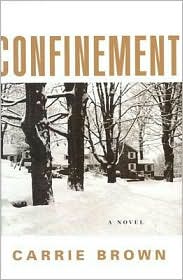 |
Best read from 2004 Confinement, by Carrie Brown. Carrie Brown created Confinement out of a single image�a man in the backseat of a car being driven at night down a long snow-covered lane. �That was all I had at first,� says Brown. �I don�t know where the image came from, but it wouldn�t go away. Then I had to find out who this man was, and where he was going, and where he�d come from.� Oddly enough, the more Brown thought about this man in the backseat, the less significant he became. The story focused instead on another man, the one driving the car. Arthur Henning is a Jew who left Austria for England at the outset of World War II. After losing his home to the Nazis, he then loses his wife and daughter in one of the raids during the Battle of Britain. When the war ends, he immigrates to America with his surviving son where he becomes the chauffeur of a rich businessman. Even after Henning starts a new life in America, he continues to suffer throughout the story, enduring all his hardships with stoic grace. He is a man of dignity and honor who expects little out of life, and gets exactly what he expects. Having experienced so much loss already, he now lives confined by the fear of losing anything else. Too scared to do anything but follow orders, he stands by passively while those he loves are harmed along with him. �Over the years, doing what the Duvalls told him to do had become inseparable from his own character, his own will. Too late, he understood that the obscure pain he had felt for so long was connected to this abdication...Arthur believed himself broken, a man who had lost everything.� When Henning happens upon the grandson he allowed to be given up for adoption, he starts to question everything he�s done, or more to the point, not done. He ponders his life in a series of flashbacks while working up the courage to make amends to those who have paid for his inaction. The reader is kept in suspense, not knowing whether or not Henning will dare to take a risk until the final few paragraphs. In this wonderfully crafted book, Brown achieves the most difficult task of getting the reader to care for an indecisive hero. Making this doubly hard was the fact that she shared no biographical similarities to this character. As Brown says, �I am neither male, nor Jewish, nor was I alive during WWII.� To understand Arthur Henning, Brown delved into the Austrian Holocaust and studied accounts of refugees in Great Britain and in the U.S. during and after WWII. She spent a week in Vienna, where she wandered the city streets and met with a curator at the city museum. The curator steered her toward a collection of historical photographs that provided Brown an authentic look into that lost era. �Such felicitous moments cannot be counted on during research,� Brown says, �but it�s lovely when they occur.� |
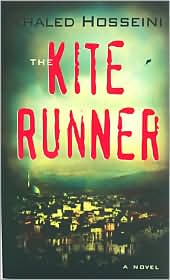 |
Best read from 2003 The Kite Runner, by Khaled Hosseini. Billed as the first novel written in English by an Afghan writer, this stunning debut is a poignant tale of friendship, betrayal, and the search for redemption. The language is poetic; the plot, fascinating; and the story, heart-rending. The Kite Runner carries the reader through everyday life in Kabul, Afghanistan, from the lush days before the Soviet invasion through the rise to power of the Taliban. We first view the city from the protagonist�s privileged point of view. As the son of a wealthy merchant, Amir shows us Kabul in all its glory. Despite class differences, Amir plays daily with his servant, Hassan. They compete together in the annual kite-fighting tournament, where Amir controls a kite with a glass-studded string and Hassan runs down other kites when Amir cuts their lines. The two boys are best friends, but even so, Amir sacrifices Hassan in an attempt to gain his father�s respect. Amir lives with the guilt of his betrayal and cowardice for decades, and when he�s called back to Kabul in 2001, he goes there seeking redemption. The city of his youth is barely recognizable. A dusty haze fills the air, buildings lie in ruin, and citizens train their eyes on the ground, avoiding the hanging bodies dangling overhead. Amir�s shock is complete when he witnesses a man attempting to sell his artificial leg for money to feed his family. As terrible as it is, this is the Afghanistan the outside world has been shown in recent years. The power of Hosseini�s story comes not from providing new and startling details of the current situation, but in giving us something to compare it to. With its marble floors, gold-stitched tapestries, and poplar trees lining the red brick driveway, the house Amir grew up in could have been plucked from an affluent neighborhood anywhere else in the world�a stunning revelation to all those whose only views of the country had come from CNN war footage. Hosseini was born in Kabul, escaping to the United States in 1980 when his family received political asylum, so the descriptions he provides ring true. Additionally, he shares insight into the lives of Afghan expatriates after relocating to America. Clustered together in tight-knit communities, they maintain traditional customs. When Amir flirts with a young Afghan woman, her father shoos him away until he calls on her properly�by having his own father arrange a lafz, the ceremony of �giving word.� By bringing the reader into the Afghan community, Hosseini humanizes their plight and makes the current devastation more astonishing. Kabul�s metamorphosis into a pockmarked slum carries more weight after knowing the once-lavish Afghanistan of yesteryear. Filled with this sense, it�s hard not to compare it to your own neighborhood and wonder how each of us would react to that transformation. Considering it happened to Afghanistan over a scant 30 years, that question should haunt readers long after they�ve finished the story. |
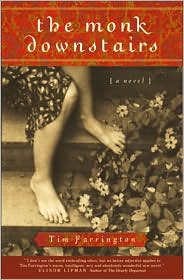 |
Best read from 2002 The Monk Downstairs, by Tim Farrington. A lost monk finds his way again through his upstairs neighbor. A cynical, single mother learns to hope again through her downstairs tenant. At its core, The Monk Downstairs is a love story, but it is so much more. Farrington�s storytelling is philosophical, spiritual, and whimsical, and somehow he pulls off this complex mix without seeming condescending. As the single mother and the monk downstairs move past earlier, regrettable decisions into an unknown future, readers can�t help being filled with wonder as they turn one captivating page after another. As with Farrington�s two previous novels (The California Book of the Dead and Blues for Hannah), he holds the reader�s interest through beautifully crafted prose and well-constructed characters. Michael Christopher, the downstairs monk, starts out as a stranger, �a lanky man with rounded shoulders and a long, sad face muffled by a beard in need of trimming...his hair was cropped close, the merest new dark stubble on a skull that had obviously been kept shorn until recently.� But as he adjusts to life outside the monastery, he evolves into the next-door neighbor we can all recognize and love. The story�s point of view is that of Rebecca, a single mother struggling to find comfort in her not-so-comfortable rut. Her daily routine is made up of simple experiences, each unremarkable but personable. Though we see the world through Rebecca�s eyes, we also gain insight into Michael Christopher�s mind through letters he writes to a monk in the order he renounced. We see events through Rebecca then share in Michael�s perception by his tone in the correspondence. Farrington crafts his scenes with vivid imagery, but not in a manner that bogs the reader down in minutia. By focusing on a few telling details, he gives us peripheral information about the characters. After Rebecca returned home from a failed date, she �passed through the kitchen to the back porch. The abalone shell on the top shelf was filled with butts; she kept meaning to empty it. She sat down, tugged her coat around her, and lit the day�s last Marlboro. Above her, the stars themselves seemed weary in a sky bleached thin by the city�s lights.� The fact that Rebecca hides her smoking from her daughter is touching. When she needs a relaxing drag, she sneaks out to her back porch, and it is imperfections such as this that make her quest for a better life so endearing. As I discovered the characters� quirks, I grew closer to them, and as I got deeper into the story, I forgot I was reading a book. Instead, I was walking through the downstairs apartment with Rebecca and Michael Christopher, seeking comfort in their company, and searching for a perfect peace. |
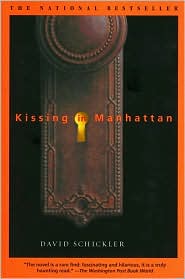 |
Best read from 2001 Kissing in Manhattan, by David Schickler. The main characters in this collection of linked stories all live in the same building in Manhattan. But what really connects all of the stories is the power of Schickler's writing. There is force and urgency in each of his stories and not a wimp in the cast. It's hard to put the book down once you begin. A stunning debut. |
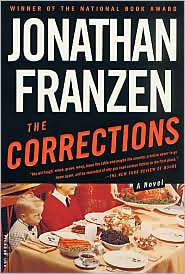 |
Best read from 2000 The Corrections, by Jonathan Franzen. Franzen is at the height of his game writing about an extended, dysfunctional, Midwestern family. The dad has just retired and is suffering the early stages of Alzheimers; the mom is determined to be a perfect little Martha Stewart clone, though few things seem to go her way; one son is trying to bilk people out of their money through a scheme involving fraudulent investment in a former Soviet country; another son is battling depression; and the daughter is a chef whose laurels become tarnished after an affair with the owner. This book is a hefty tome and a difficult read, made so by Franzen's complex and often overwrought writing style. At times it seems he is more interested in his clever wordplay than in telling the story (there is at least one instance where a single sentence takes up an entire page; an amazing feat, but also an unneccesary one). Even so, The Corrections truly is a Great American Novel and well worth the effort to slog through it. |
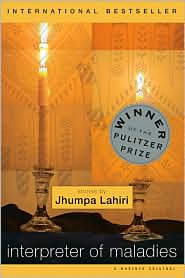 |
Best read from 1999 Interpreter of Maladies, by Jhumpa Lahiri. Winner of the Pulitzer Prize for Fiction, this debut collection of stories is about Indian immigrants in America either trying to maintain their culture or trying to run away from it. Lahiri's prose is meticulously crafted so that every sentence sings. Truly a beautiful read. |
 NOVEL  NON-FICTION  SHORT STORY COLLECTIONS  POETRY COLLECTIONS |
My top ten favorite novels
My top ten favorite poetry books
|